

Spending time in nature is usually associated with positive effects on human well-being – improved mood, reduced stress, better attention, and a stronger sense of connection with the natural environment. However, a new international study co-authored by researchers affiliated with Vilnius University Faculty of Economics and Business Administration and Mykolas Romeris University reveals a more nuanced side of this relationship: enjoyable nature experiences can, in some situations, compete with people’s willingness to help others or the environment.
The study, titled “When nature competes: Rewarding nature experiences can undermine prosocial and pro-environmental behavior”, was published in the Journal of Environmental Psychology. Its authors are Yannick Joye, Florian Lange, Aivaras Vijaikis, Dovilė Barauskaitė, and Jan Willem Bolderdijk.
Among the co-authors, Yannick Joye is a Chief Researcher at Vilnius University Faculty of Economics and Business Administration, Dovilė Barauskaitė is an Associate Professor at Vilnius University Faculty of Economics and Business Administration, and Aivaras Vijaikis is a Junior Researcher at Mykolas Romeris University. Their work contributes to a broader understanding of decision-making, consumer behavior, sustainability, and the psychological mechanisms behind human choices.
The research explored what happens when an enjoyable nature experience competes with an opportunity to perform a prosocial or pro-environmental action. In other words, will people still choose to help when the alternative is a pleasant, relaxing, and emotionally rewarding experience of nature?
To answer this question, the researchers conducted three online experiments. Participants repeatedly chose between two activities: watching a short video or completing a small task that generated money for either an environmental organization or another participant. The videos showed either beautiful nature scenes or urban traffic scenes.
The results showed that participants were more likely to choose the video instead of the helping task when the video featured nature rather than urban traffic. This suggests that nature scenes were more rewarding and, precisely because of their appeal, sometimes led participants to forgo actions that would have benefited other people or the environment.
According to the authors, these findings do not mean that nature is harmful or that nature experiences should be viewed negatively. Rather, the study adds nuance to the widely accepted positive story about the benefits of nature. Nature experiences can be pleasant, restorative, and emotionally rewarding, but in certain situations they may also be chosen over other valuable actions.
The findings are relevant not only for environmental psychology and consumer behavior research, but also for practical initiatives aimed at encouraging sustainable and prosocial behavior. The implication is not to discourage people from spending time in nature, but to design nature-based experiences in ways that align personal enjoyment with social and environmental benefits.
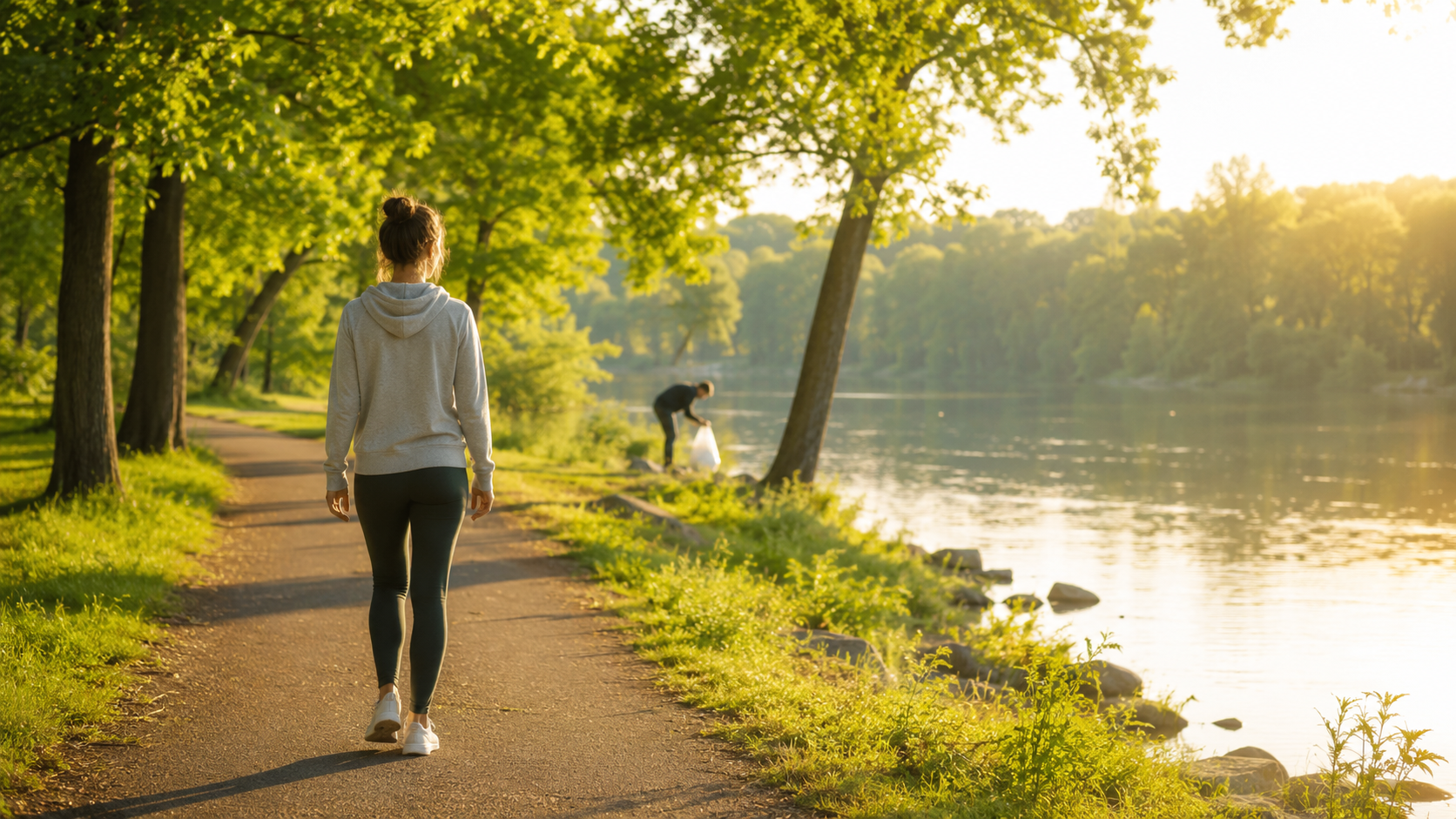
Examples could include community gardening, citizen-science projects, environmental monitoring initiatives, or walks and hikes that also involve collecting litter. Such activities make it possible to combine the emotional rewards of being in nature with a tangible contribution to the well-being of communities and the environment.
For VU FEBA, this study contributes to a broader understanding of decision-making, consumer behavior, and sustainability challenges. It shows that even positively valued experiences can have complex effects on people’s choices when people are faced with competing attractive alternatives.
In short, nature can support well-being and strengthen people’s connection with the environment, but in some situations it can also compete with actions that would benefit others or the planet. Future solutions should therefore aim to ensure that spending time in nature and contributing to social or environmental good work together rather than as competing alternatives.
Publication:
Yannick Joye, Florian Lange, Aivaras Vijaikis, Dovilė Barauskaitė, Jan Willem Bolderdijk. When nature competes: Rewarding nature experiences can undermine prosocial and pro-environmental behavior. Journal of Environmental Psychology, Volume 111, 2026. https://doi.org/10.1016/j.jenvp.2026.103033